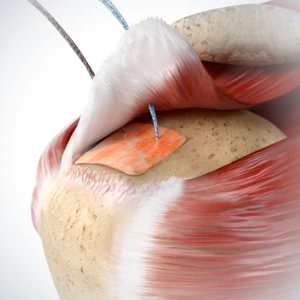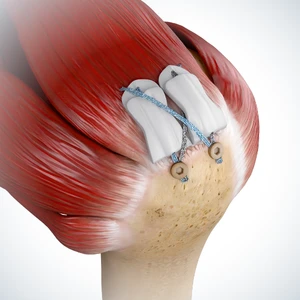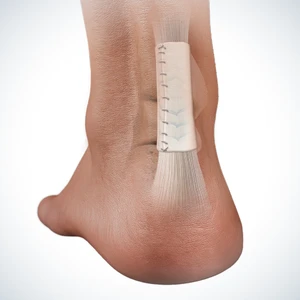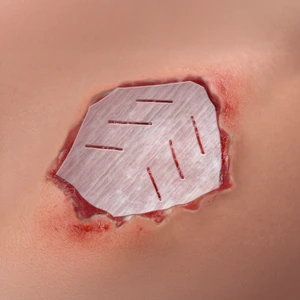
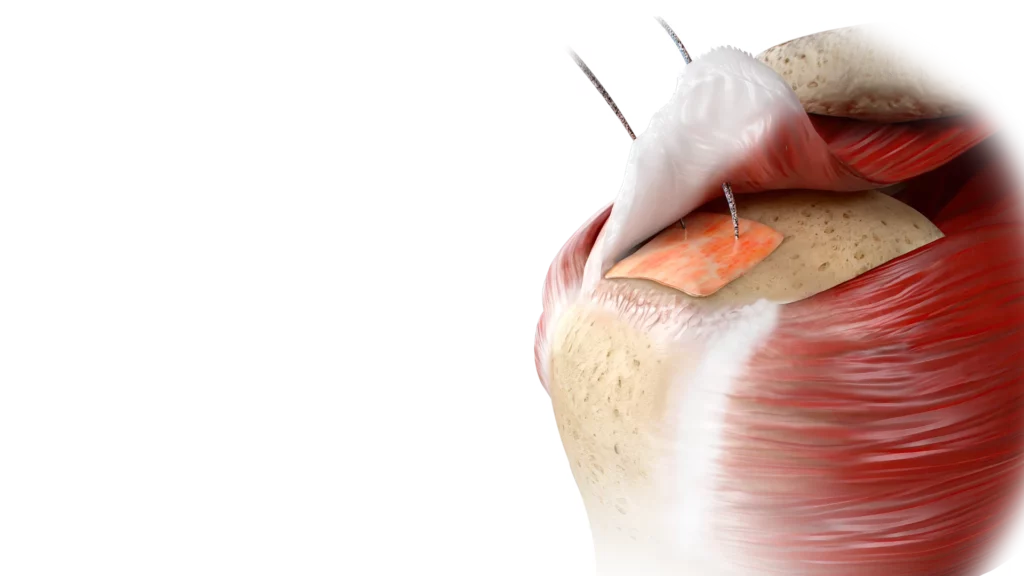
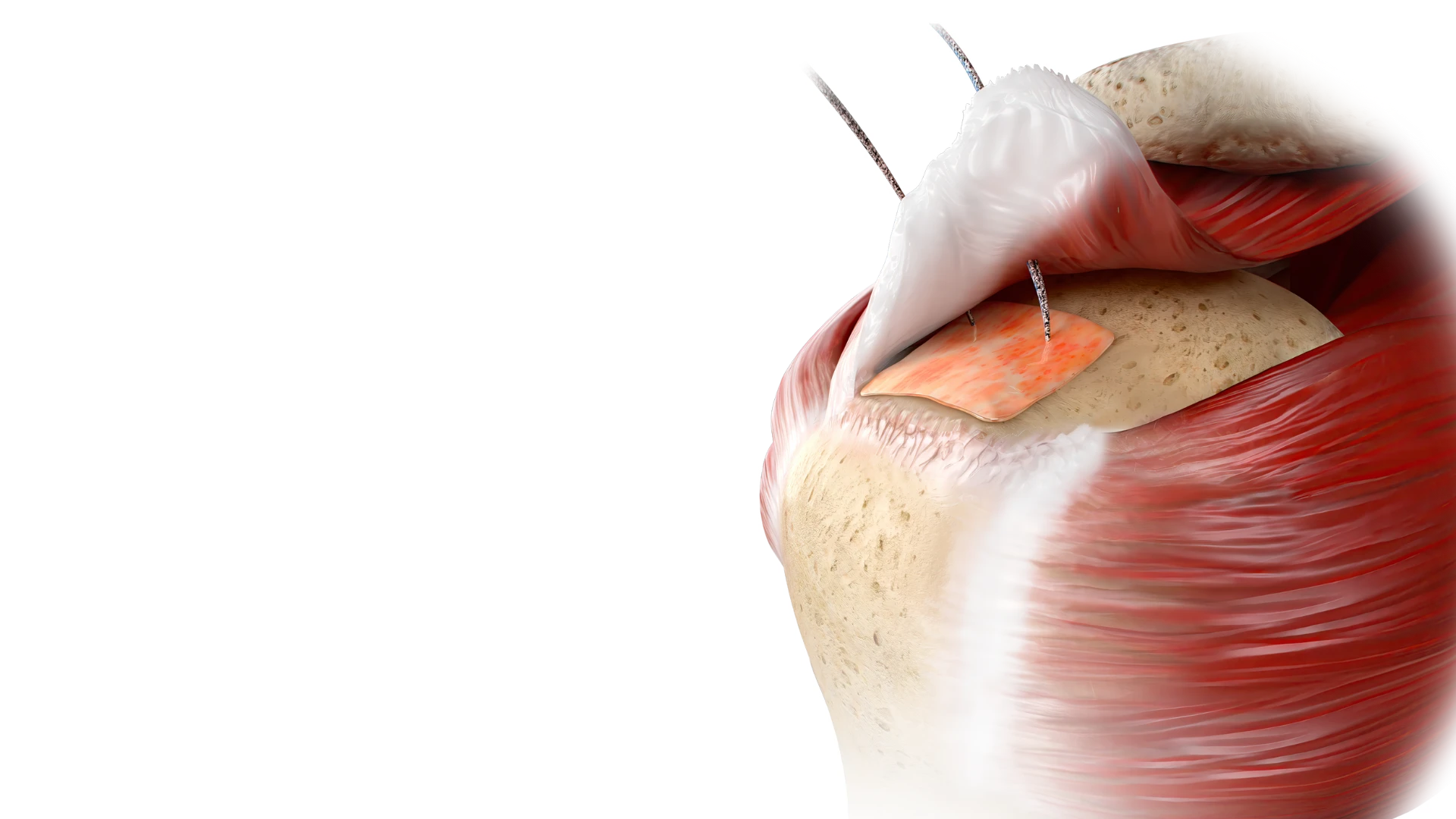

ROTIUM® is a bioresorbable wick placed at the tendon–bone interface designed to:
Designed for efficiency, ROTIUM integrates seamlessly into standard rotator cuff repair techniques without adding surgical time.
The bioresorbable scaffold delivers targeted biologic support directly at the repair site to enhance the healing environment and promote native tissue remodeling.
https://www.youtube.com/watch?v=L_39PmiG3vU
ROTIUM Bioresorbable Wick Animation
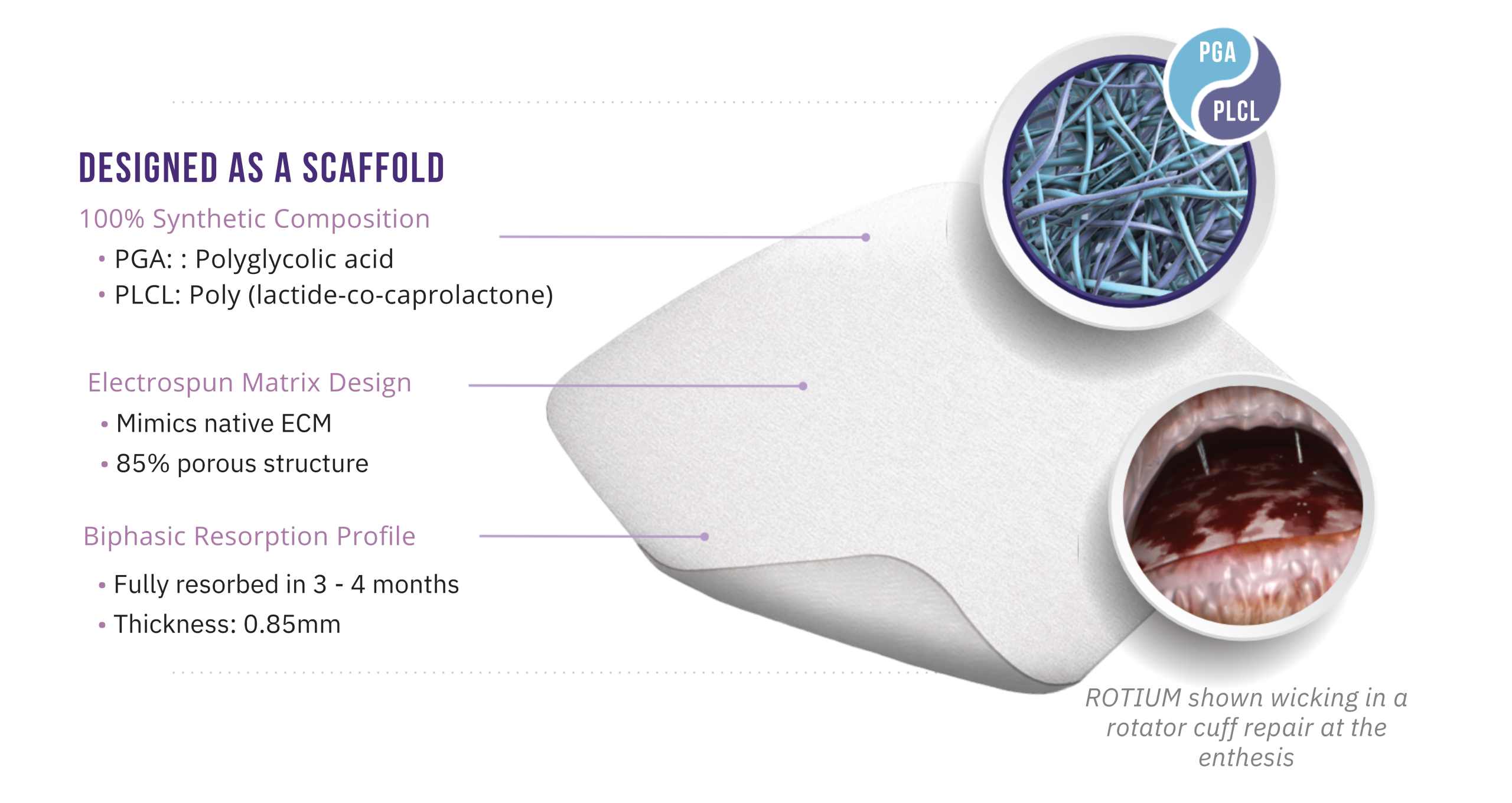
Pass suture through scaffold.
Taco & push through cannula.
Position on the repair footprint.
Complete repair with cuff over ROTIUM®.
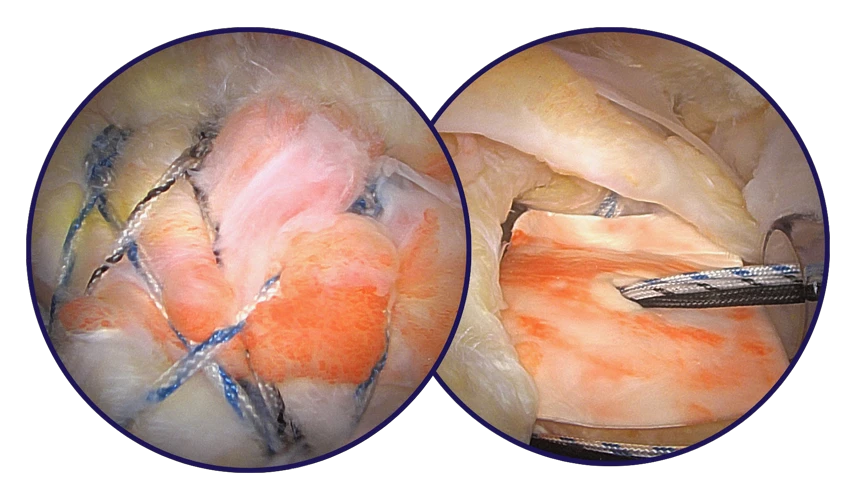
Arthroscopic images courtesy of Dr. Jacob Kirsch
Backed by 16 years of research, Atreon’s technology delivers science-driven solutions that support healing, enhance repair, and elevate surgical outcomes.
Patient Outcomes Study Findings: Patients who received the ROTIUM scaffold had a significantly lower cumulative treatment failure rate (7.1%) compared to those who did not receive the scaffold (50%) over an average follow-up of 17 months.
ROTIUM Clinical Outcomes Publication
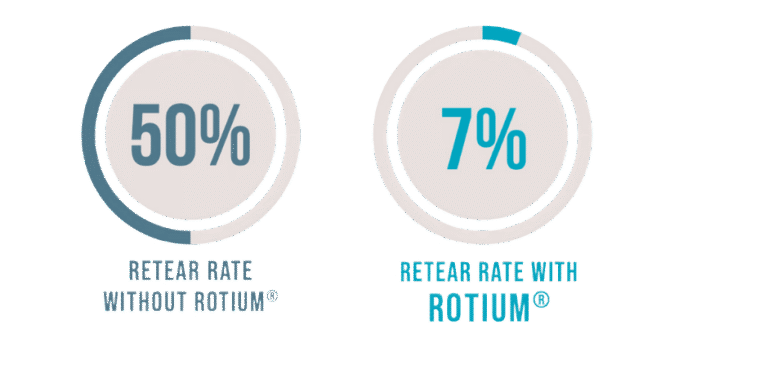
Beleckas, C. M., Minetos, P., & Badman, B. L. (2023). J Orthopaedic Experience & Innovation, 4(2).
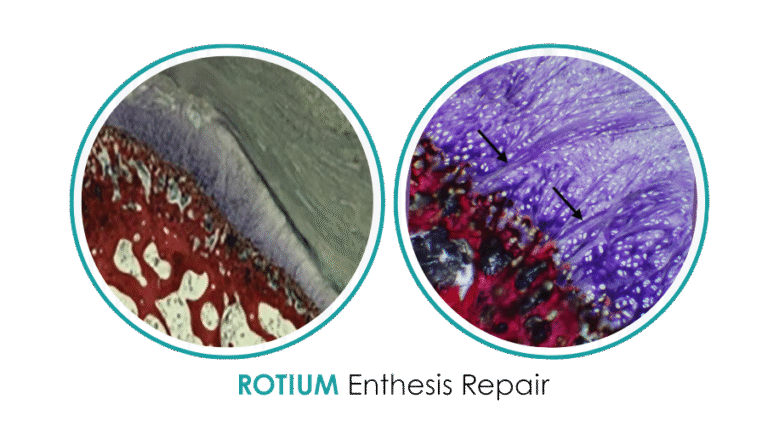
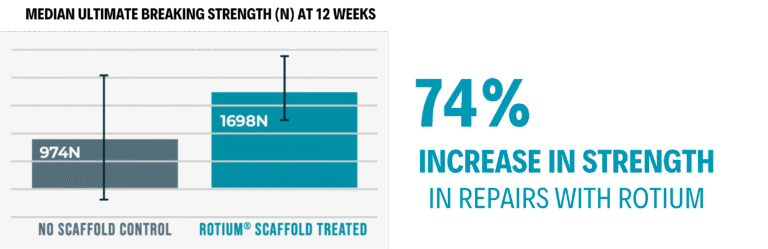
Animal Study Findings: Results showed that ROTIUM scaffold-augmented repairs exhibited increased failure strength and bone-tendon integration with the development of Sharpey-like fibers at the tendon-bone interface, suggesting improved healing.
J Shoulder Elbow Surg. 2022;31(2):402-412
DOI: 10.1016/j.jse.2021.07.018
ROTIUM Animal Study Publication